
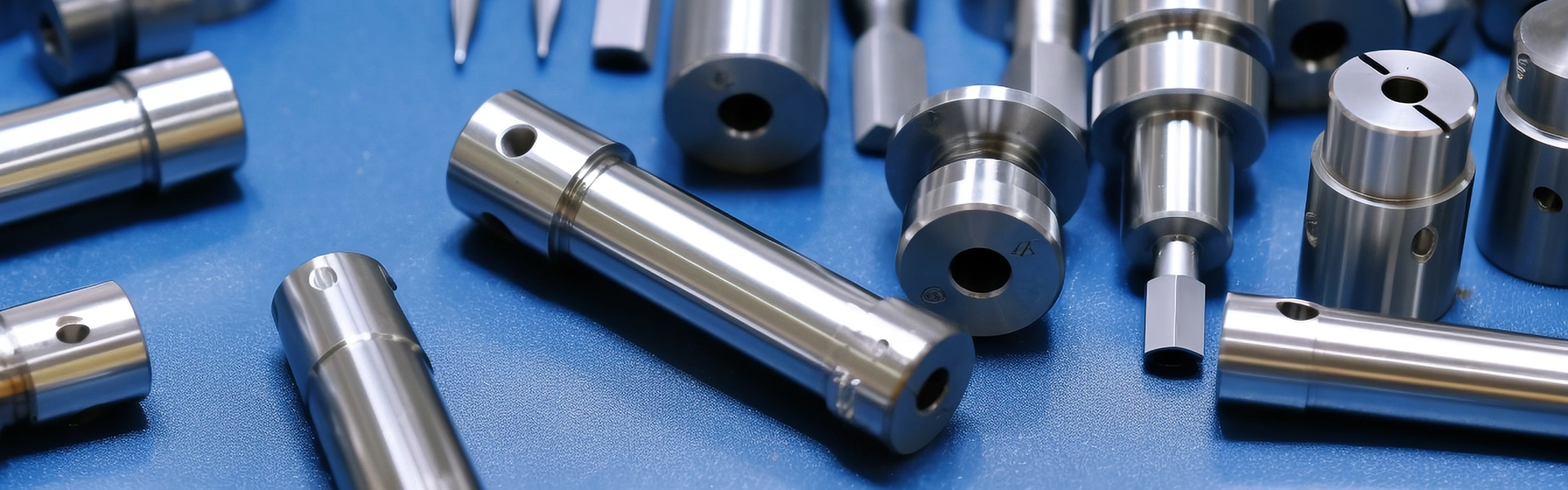
Top CNC Machining Service Manufacturer: Your Guide to Precision and Quality
2026-05-26
In the world of modern manufacturing, precision isn’t just a goal—it’s the foundation of every successful project. Whether you’re prototyping a groundbreaking design or scaling up production, the quality of your CNC machining partner can make or break your timeline and budget. That’s where ProtoMat comes into play. But what truly sets a top-tier CNC machining service apart? Let’s dive into the essentials of precision, reliability, and innovation that define industry leaders—and see how ProtoMat is raising the bar.
What Sets Precision CNC Machining Apart
Precision CNC machining distinguishes itself through a relentless focus on micron-level accuracy that few other manufacturing methods can touch. While conventional machining might accept minor deviations, high-end CNC processes routinely hold tolerances within ±0.0002 inches—thinner than a human hair. This isn't just about hitting numbers on a spec sheet; it translates directly to components that slip together seamlessly in assemblies, operate without premature wear, and perform flawlessly in critical applications like aerospace turbines or surgical instruments. The technology achieves this through a blend of ultra-rigid machine bases, temperature-controlled environments, and software that compensates for tool wear in real time, ensuring that the 500th part matches the first one exactly.
What truly raises the bar is the adaptability ingrained in the programming and toolpath strategies. Instead of forcing a part to fit a limited set of moves, skilled machinists orchestrate multi-axis sequences that allow cutters to approach from optimal angles, reducing vibration and preserving surface finish. They can dial in strategies like trochoidal milling to carve complex 3D contours without overwhelming the tool, or use probe-based inspection directly on the machine to adjust offsets mid-run. This mindset turns a subtractive process into something almost sculptural, where every pass is calculated not just for speed but for the health of the tool and the integrity of the final geometry.
The real differentiator, though, lies in the marrying of automation with meticulous craftsmanship. Modern precision CNC shops don't just hit cycle start and walk away; they engineer entire workflows where robots load raw stock, chips are evacuated through smart conveyor systems, and coordinate measuring machines feed data back to adjust upcoming operations. Yet at the center is the human element—an experienced eye that catches a barely perceptible chatter pattern, or a programmer who tweaks a post-processor to extract 10% more tool life. This symbiosis of digital precision and hands-on expertise delivers parts that aren't just accurate, but consistently remarkable, batch after batch.
The Art of Achieving Micron-Level Accuracy
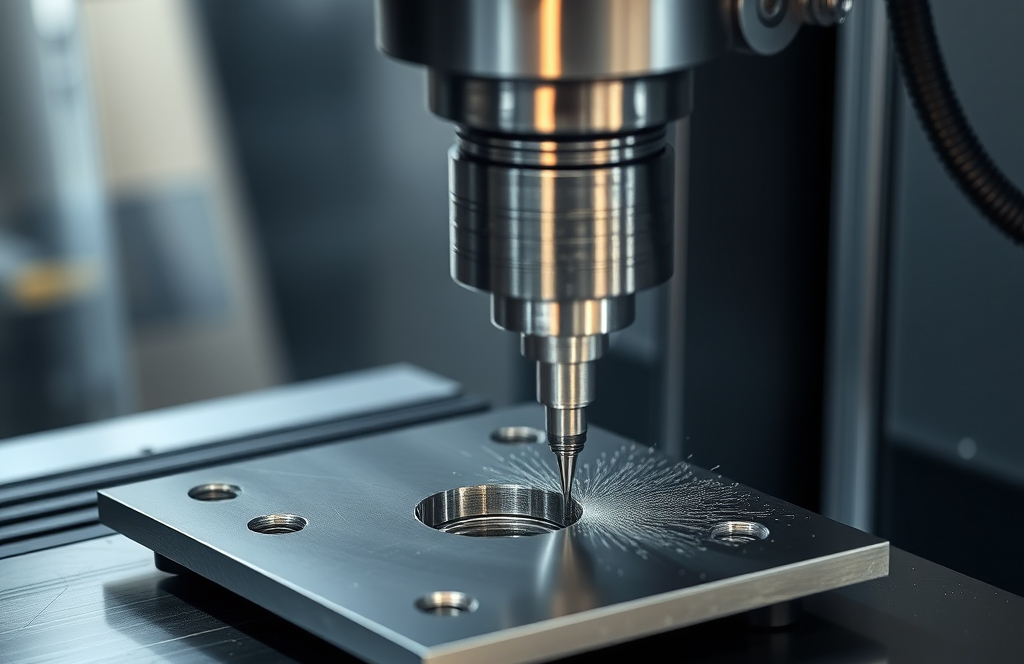
Precision at the micron scale begins long before any cutting tool touches the material. It's about understanding the subtle interplay between temperature, vibration, and material behavior. Even a one-degree shift in the shop environment can expand a workpiece enough to throw off measurements by several microns. Mastering this art means becoming obsessive about thermal stability—letting parts and instruments acclimate, using coolant at consistent temperatures, and measuring only when everything is in equilibrium. The best machinists develop an almost intuitive sense for these invisible forces, knowing exactly when a machine has settled into its zone of peak accuracy.
At the machine level, micron accuracy demands a relentless pursuit of geometric integrity. This isn't just about calibrating the axes; it's about understanding and compensating for every micro-error: spindle runout, ballscrew backlash, and even the elastic deformation of the machine structure under load. Techniques like ballbar testing and laser interferometry become routine, mapping out volumetric errors and correcting them in the controller. But beyond the hardware, there's a critical mental discipline—thinking in terms of tenths of microns, planning toolpaths to minimize sudden forces, and choosing tools not just for geometry but for their edge condition under extreme magnification. The surface finish under a microscope tells the true story of the process.
Ultimately, the human element is the wildcard in achieving micron-level accuracy. No amount of automation can replace the judgment developed through years of tactile feedback and visual scrutiny. It's the ability to read the faint chatter marks on a sidewall, to feel the slight resistance when deburring by hand, and to know that a single stray dust particle can ruin a surface profile. This is where craftsmanship and technology converge—where the machinist becomes both artist and scientist, relying not on rigid procedures but on a deep, internalized understanding of the material-removal process. It's a quiet, patient pursuit, often invisible to the untrained eye, but it separates truly exceptional work from the merely acceptable.
Quality Checks That Go Beyond Standard
Standard quality checks tend to look at surface-level indicators—specs met, tolerances held, defects counted. But what about the things that aren't on the checklist? The subtle material inconsistencies that only surface after months of use, the ergonomic quirks that irritate users without them knowing why, the quiet ways a product can fail to delight. Going beyond standard means developing a sensitivity to these hidden dimensions, training inspectors to notice not just what's wrong, but what could be better, even if it technically passes.
It often starts by rethinking the inspection environment itself. Instead of sterile labs, we simulate real-world chaos: the hairdryer tested in a humid bathroom, the kitchen gadget covered in flour and oil, the outdoor gear exposed to sudden temperature swings. This isn't about torturing products; it's about understanding their actual lives. We invite the end user into the process, too—not just for feedback, but to observe how they instinctively misuse a product, revealing design weaknesses that no spec sheet would ever flag.
At its core, this deeper approach treats quality as a narrative, not a binary pass/fail. A scratch might be acceptable to a standard, but if it tells a story of careless assembly, we flag it. A slightly uneven finish might be invisible to a machine, but if it cheapens the perceived value, we call it out. Because the difference between a product that is merely compliant and one that earns genuine loyalty lies in the details that no standard yet covers.
Material Mastery for Your Toughest Projects
Pushing the boundaries of what's possible starts with an intimate understanding of the materials you're working with. Every alloy, polymer, composite, or natural fiber carries its own personality—its strengths, quirks, and failure modes. When you move beyond generic datasheets and learn to read the subtle signatures of stress, fatigue, and environmental exposure, you transform from a spec-follower into a true builder. This isn't about memorizing tensile ratings; it's about developing a tactile intuition for how a material will behave when pushed past its comfort zone, how it marries with fasteners and finishes, and where it will surprise you under real-world loads.
The toughest projects demand a proactive approach to material selection and testing. Instead of waiting for a prototype to crack or corrode, you simulate the harshest conditions early—thermal cycling, impact fatigue, chemical exposure—and observe how grain structure shifts or how adhesive bonds creep over time. Pairing hands-on destructive testing with advanced analytical tools gives you a feedback loop that no textbook can replicate. You start to see the difference between a catastrophic failure and a graceful degradation, and you learn to design with that in mind. This iterative, almost obsessive engagement with material behavior is what separates the work that merely functions from the work that endures.
Ultimately, mastering materials for extreme applications means building your own internal library of experience. You'll remember the time a seemingly indestructible shaft sheared under a harmonic load no one had calculated, or the way a particular seal swelled and saved a hydraulic system in a thermal spike. Those stories become the foundation of your judgment. They let you make bold choices—substituting an unconventional ceramic-matrix composite, or heat-treating a part in a way that makes the reference manuals nervous—because you've seen the edges of performance firsthand. When the project has no margin for error, it's that lived, granular knowledge that keeps your design standing when everything else says it shouldn't.
Tailored Solutions from Prototype to Production
From the initial sketch to the final assembly line, we walk alongside your team to bridge the gap between innovative ideas and manufacturing reality. Our approach integrates engineering insights early on, ensuring that every prototype is designed not just for performance but also for seamless scalability. This prevents costly redesigns later and keeps your timeline intact.
No two projects are alike, so we’ve built a flexible framework that adapts to your specific requirements—whether you need rapid iteration on a single concept or a full ramp-up to mass production. By combining hands-on craftsmanship with advanced production technologies, we deliver consistent quality at every volume, turning your vision into a market-ready product without unnecessary delays.
Partnering with a Manufacturer You Can Trust
When your business relies on the quality and consistency of a product, the manufacturer behind it becomes more than just a supplier—they become a partner in your success. Choosing a manufacturer you can trust means looking beyond flashy certifications and diving into their track record with real-world clients. Do they deliver on time, every time? Are their quality control processes woven into the production line, catching flaws before they become your problem? A trustworthy partner will be transparent about their capabilities, honest about lead times, and proactive in communication, giving you the confidence to focus on what you do best.
But trust isn't built on promises alone; it's forged through consistent actions. A reliable manufacturer invests in skilled workers, maintains their equipment meticulously, and sources raw materials from ethical suppliers. They view your specifications not as a suggestion but as a commitment, and they treat your intellectual property with the care it deserves. This level of reliability means fewer surprises, lower stress, and a product that reflects your brand's promise to your own customers. It's the kind of partnership where you don't just buy a product—you gain a strategic advantage that helps you move faster and adapt when markets shift.
Ultimately, the right manufacturing partner empowers you to innovate without fear. When you know the production side is in capable hands, you can experiment with new designs, respond to trends quickly, and scale up without the usual growing pains. Look for a partner who asks about your goals, not just your order volume. A manufacturer who understands your vision will offer thoughtful suggestions, anticipate challenges, and help you navigate the complexities of global supply chains. That's the kind of relationship that turns a simple transaction into a lasting foundation for growth.
FAQ
A top manufacturer combines advanced multi-axis equipment, rigorous quality control, and experienced engineers who treat each project as a unique challenge rather than just another job.
Precision isn't just about tight tolerances on paper; it's the consistency across thousands of parts and the ability to maintain those standards even as materials and designs get more complex.
They work comfortably with everything from standard aluminum and steel to exotic alloys, engineering plastics, and composites, adjusting toolpaths and parameters based on deep material knowledge.
You're not just paying for machine time; you're tapping into design-for-manufacturability insights that catch potential issues before metal is cut, saving time and preventing costly revisions.
Through in-process inspection, calibrated fixturing, and statistical process control that identifies drift early, so every batch meets the same spec without relying on luck.
It's the bridge between functional parts and market-ready products, encompassing anodizing, plating, polishing, or painting—all under the same roof to avoid outsourcing delays and inconsistency.
Look for evidence of investment in newer machine tools, ongoing staff training, and certifications that require periodic audits, not just a one-time plaque on the wall.
Conclusion
In today's manufacturing landscape, finding a top CNC machining service manufacturer means looking beyond basic capabilities to a partner that truly understands precision and quality. What sets the best apart is their relentless pursuit of micron-level accuracy, achieved not just through advanced machinery but a deep-rooted engineering mindset. It's an art form where thermal stability, vibration control, and toolpath optimization become second nature, allowing them to hold tolerances that most shops would dismiss as impossible. This obsession with detail carries through to quality assurance—they don't just check parts; they interrogate them with multi-sensor CMMs, surface profilometry, and in-process monitoring that catches deviations before they become problems, far exceeding any standard checklist.
Equally critical is material mastery, because even the tightest tolerances mean nothing if the wrong alloy or polymer fails in the field. A trusted manufacturer guides you through material selection, balancing machinability, performance, and cost, whether it's a high-temperature superalloy for aerospace or a biocompatible polymer for medical devices. This expertise extends to offering tailored solutions that scale seamlessly from a single prototype to full production runs, without sacrificing quality at any volume. Ultimately, it's about partnership—working with a team that takes ownership of your project's success, communicates transparently, and consistently delivers parts that outperform expectations. That level of trust transforms a supplier into an extension of your own engineering team, making precision and quality not just a promise, but a proven outcome.
Contact Us
Contact Person: Joe
Email: [email protected]
Tel/WhatsApp: +8613799507208
Website: https://www.3dprotomat.com/