Top Port Dredging Supplier: Expert Solutions for Coastal and Waterway Projects
2026-05-21
Ports and waterways are the lifeblood of global trade, yet keeping them navigable is a constant battle against sedimentation and erosion. When critical infrastructure is at stake, project managers need more than just heavy equipment—they need a partner who understands the unique challenges of coastal and waterway projects. That’s where YaKai Dredger comes in. As a top port dredging supplier, we deliver expert solutions that combine cutting-edge technology with decades of on-the-ground experience. In this post, we’ll explore why our approach is redefining efficiency and reliability in dredging, and how we help ports stay open, safe, and competitive. Dive in to discover what sets true expertise apart.
Unveiling the Depths: Precision Dredging for Modern Ports
Modern ports are gateways to global commerce, yet their functionality hinges on a silent, underwater ballet of engineering precision. The process of dredging has evolved from sheer brute force removal of sediment into a highly calibrated science, where millimeter-level accuracy determines the safety of colossal container ships and the delicate balance of marine habitats.
Advanced sonar arrays, real-time kinematic positioning, and environmental monitoring systems now work in concert to sculpt harbor basins with surgical finesse. Operators, often compared to deep-sea architects, interpret live data streams to adapt cutter head pressure, suction intensity, and discharge placement instantly—avoiding over-excavation that wastes resources and disturbs benthic communities. This dance of technology and expertise ensures that every cubic meter moved maximizes both navigational safety and ecological responsibility.
The evolution of precision dredging has also blurred the line between port maintenance and habitat creation. Excavated materials, once viewed as spoil, are now repurposed to construct intertidal wetlands, nourish eroding coastlines, or fashion artificial reefs that teem with life. In an era of rising sea levels and behemoth vessels, these quiet innovations beneath the waterline prove that the true depth of a modern port lies not just in its mudline, but in its capacity to harmonize industrial might with environmental stewardship.
Tailored Strategies for Complex Coastal Challenges
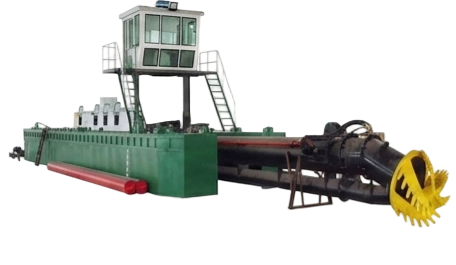
Every coastline tells a different story — some face relentless erosion, others grapple with saltwater intrusion or the loss of critical habitats. Cookie-cutter solutions rarely work in these dynamic environments, where wave patterns, sediment flows, and local ecosystems demand a more nuanced approach. Our work begins by decoding the specific physical and ecological forces at play, from seasonal storm surges to the subtle shifts in tidal currents that reshape shorelines over time.
Instead of relying on rigid infrastructure alone, we blend nature-based defenses — like living shorelines and restored wetlands — with selective hard engineering where it’s truly needed. This hybrid thinking not only buffers communities from storm impacts but also revives fisheries and provides spaces for wildlife to thrive. By modeling long-term scenarios and engaging local stakeholders early, we help turn coastal threats into opportunities for regeneration, ensuring that resilience is built into the landscape rather than bolted on as an afterthought.
Innovative Equipment That Reshapes Shorelines
The latest generation of amphibious dredgers is turning heads with their ability to navigate both land and shallow water without the need for tugboats or complex mobilization. These machines crawl onto beaches, reposition themselves with millimeter precision, and pump sediment through floating pipelines that snake across the surf zone. Their secret lies in adaptive track systems and real-time kinematic GPS, which allow operators to sculpt beaches with the delicacy of a landscape architect rather than the brute force of traditional methods.
Meanwhile, wave-powered autonomous vessels are quietly rewriting the rules of coastal management. Instead of burning fuel, they harness the very energy that erodes coastlines, using it to gather data and even redistribute sand. One standout model deploys a swarm of small, solar-assisted drones that work in concert to map bathymetry and direct a mothership where to deposit material. The result is a self-sustaining cycle that mimics natural processes, building up dunes and berms at a fraction of the carbon cost.
On the more unconventional side, experimental electrokinetic barriers are starting to prove that you can combat erosion without moving a grain of sand. By embedding a grid of low-voltage electrodes into the seabed, these systems induce a small pH change that encourages calcium carbonate to crystallize around silt particles, effectively gluing them in place. Early trials show that this approach can stabilize sediment for months with minimal ecological disruption, offering a glimpse of a future where shorelines are reinforced not by rock walls but by a subtle charge of electricity.
From Silt to Success: Seamless Project Execution
Every project begins with a pile of unknowns, like silt clogging the early stages. We've learned that the secret to seamless execution isn't about having all the answers upfront—it's about building a team that can navigate murky waters without losing momentum. Instead of rigid plans, we rely on adaptive frameworks that let us shift priorities as real challenges surface, turning obstacles into stepping stones before they become roadblocks.
The transition from messy beginnings to a smooth finish hinges on transparent communication loops. Too many teams hide their setbacks, only to watch small issues compound into larger ones. By keeping updates frequent and candid, everyone stays aligned without the need for micromanagement. This approach doesn't just prevent delays; it fosters a sense of shared ownership that makes the entire process feel effortless, even when the work itself is demanding.
What truly defines success in execution isn't a flawless timeline, but how naturally the team recovers when things go sideways. We've found that embedding quick feedback cycles and celebrating small wins along the way transforms stress into energy. By the time a project crosses the finish line, the early silt has settled, and what remains is a clear path forward—proof that seamless execution comes from resilience, not perfection.
Sustainability at the Core of Every Operation
We’ve woven eco-conscious thinking into the fabric of our daily workflows—not as an afterthought, but as the starting point for every decision. From the materials we source to the energy powering our facilities, each link in the chain is evaluated for its long-term environmental footprint. This isn’t about chasing a trend; it’s about redefining what responsible operation looks like on a granular level, where even the smallest adjustment can ripple outward with meaning.
Our teams are empowered to question the status quo and prototype alternatives that feel obvious in hindsight. Sometimes it’s as simple as rerouting logistics to cut idle time, other times it’s a quiet redesign of a process that eliminates waste before it’s created. The goal isn’t perfection on day one, but a steady, unglamorous commitment to doing better—and then doing better than that. It’s a mindset that turns every operator into a steward, blending pragmatism with a quiet belief that industry can nurture the planet it relies on.
What grounds us is the understanding that sustainability isn’t a standalone metric—it’s intertwined with resilience, quality, and even the dignity of the work itself. We don’t shout about it because it’s simply how we’ve learned to function. The results speak in reduced emissions, smarter use of resources, and a culture that no longer debates whether green thinking belongs at the table. It’s just the table we built.
Navigating Waterways with Proven Expertise
Every stretch of water tells a story, and reading it requires more than just a chart. Our captains bring decades of hands-on experience, understanding how currents shift with the seasons, how tides interact with river mouths, and where the channel truly lies beneath deceptive surfaces. This isn't knowledge you can download—it's earned through thousands of hours at the helm, in all conditions.
When visibility drops or traffic thickens, instinct shaped by real-world practice takes over. We've guided vessels through fog-blanketed harbors and congested shipping lanes without incident because we prepare for what you can't see coming. Our team combines traditional piloting skills with modern aids, but never lets technology replace judgment.
Clients trust us not because of a slogan, but because we've proven ourselves voyage after voyage, year after year. From narrow inland passages to open-sea approaches, our track record speaks quietly—through on-time arrivals, zero collisions, and the calm confidence that comes from knowing your waterway partners have seen it all before.
FAQ
We handle everything from capital dredging for new port construction to maintenance dredging that keeps existing waterways navigable. Our expertise covers harbor basins, approach channels, and turning basins, as well as coastal protection projects like beach nourishment.
Environmental care is built into our planning. We use precision equipment to minimize over-dredging, employ silt curtains to contain sediment plumes, and often work with marine biologists to schedule projects outside sensitive breeding seasons. Disposal is handled responsibly, sometimes repurposing material for habitat restoration.
It's the combination of technical skill and flexibility. We don't just bring standard machinery; we analyze the specific site conditions and tailor our fleet accordingly. Plus, we invest heavily in crew training so problems get solved on the spot rather than escalating into delays.
Absolutely. For coastal jobs, we deploy our larger hopper and cutter suction dredgers that can handle open-water conditions. Inland river and canal work calls for smaller, more maneuverable equipment, and we have a dedicated fleet for those tight or shallow spots.
Our core fleet includes trailing suction hopper dredgers that can move thousands of cubic meters per load, heavy-duty cutter suction dredgers for rock and hard soil, and backhoe dredgers for precision work near quay walls. We also use survey drones and positioning systems that keep operations accurate day or night.
Timing varies enormously with scope, but a routine maintenance dredge might wrap up in a few weeks, while a major capital project could span a year or more. We focus on minimizing port disruption, often scheduling work during off-peak seasons and coordinating closely with harbor authorities to keep some lanes open.
Yes, we often handle the entire project chain—initial hydrographic surveys, sediment analysis, permits and regulatory public consultation, as well as dike construction or breakwater reinforcement if needed. It saves clients from having to juggle multiple subcontractors.
Conclusion
Modern port dredging demands precision that goes beyond simply deepening channels. At our core, we combine cutting-edge sonar and GPS-guided dredgers with real-time monitoring to sculpt underwater landscapes with surgical accuracy. But it's our equipment fleet that truly reshapes shorelines—hybrid-powered suction dredges, smart clamshells, and amphibious excavators that adapt to any soil composition. Sustainability isn't an afterthought; it's embedded in every operation. From silt recycling into construction material to eco-friendly sediment handling that protects marine ecosystems, we ensure progress doesn’t come at nature’s expense.
Every coastline presents unique hurdles—strong currents, sensitive habitats, or hard rock layers. Our engineers craft tailored strategies after thorough site analysis, blending proven methods with custom innovations. Seamless project execution then turns plans into reality: from initial survey to final depth verification, our teams manage logistics, permits, and community coordination without delays. With decades of navigating complex waterways, we’ve honed an instinct for risk mitigation, ensuring safe passage through busy shipping lanes or narrow channels. This holistic approach delivers ports that thrive economically while respecting their environment.
Contact Us
Contact Person: Nancy
Email: [email protected]
Tel/WhatsApp: (+86) 13869631558
Website: https://www.yakaidredger.com/