
Tug Boat Manufacturer: Building Durable Vessels for Maritime Success
2026-06-21
Behind every successful maritime operation lies a tug boat built to endure the harshest conditions. At Allheart, we don't just manufacture vessels—we engineer resilience into every weld and rivet, ensuring your fleet can handle whatever the sea throws its way. Whether navigating congested ports or tackling open-water tows, the durability of your tug defines your bottom line. Discover how our approach to shipbuilding is reshaping what it means to be sea-ready.
Forged for Fury: The Anatomy of an Unbreakable Tugboat
It starts with the spine—a keel laid down not with caution, but with a kind of quiet defiance. Every plate welded to the frame is a study in controlled aggression, the steel bent and shaped through processes that seem less like manufacturing and more like an argument with physics. The tolerances are absurdly tight, the welds deep enough to become part of the metal’s memory. This isn’t a vessel designed to avoid punishment; it’s built to remind the sea that some things simply refuse to break.
The propulsion system doesn’t hum—it growls. There’s a directness to the way power translates to thrust, a brutish efficiency that makes torque curves look like polite suggestions. The drivetrain is over-engineered in the best possible way, components massive enough that failure becomes an abstract concept. It’s the kind of setup that treats 100% output as a comfortable cruising speed, leaving the rest as headroom for moments when the water pushes back with real intent.
Above the waterline, the pilothouse sits like a clenched fist around a core of hardened glass. Visibility isn’t a luxury; it’s a tactical necessity, the windows angled to shed impact and weather with a shrug. The lines aren’t sleek—they’re functional, purposeful, each chine and curve a lesson learned from decades of taking what the ocean dishes out and asking for more. Standing at the helm, you feel less like a captain and more like a custodian of fury, guiding a machine that was never meant to be gentle.
Quiet Strength: How Our Tugs Take on the Toughest Jobs
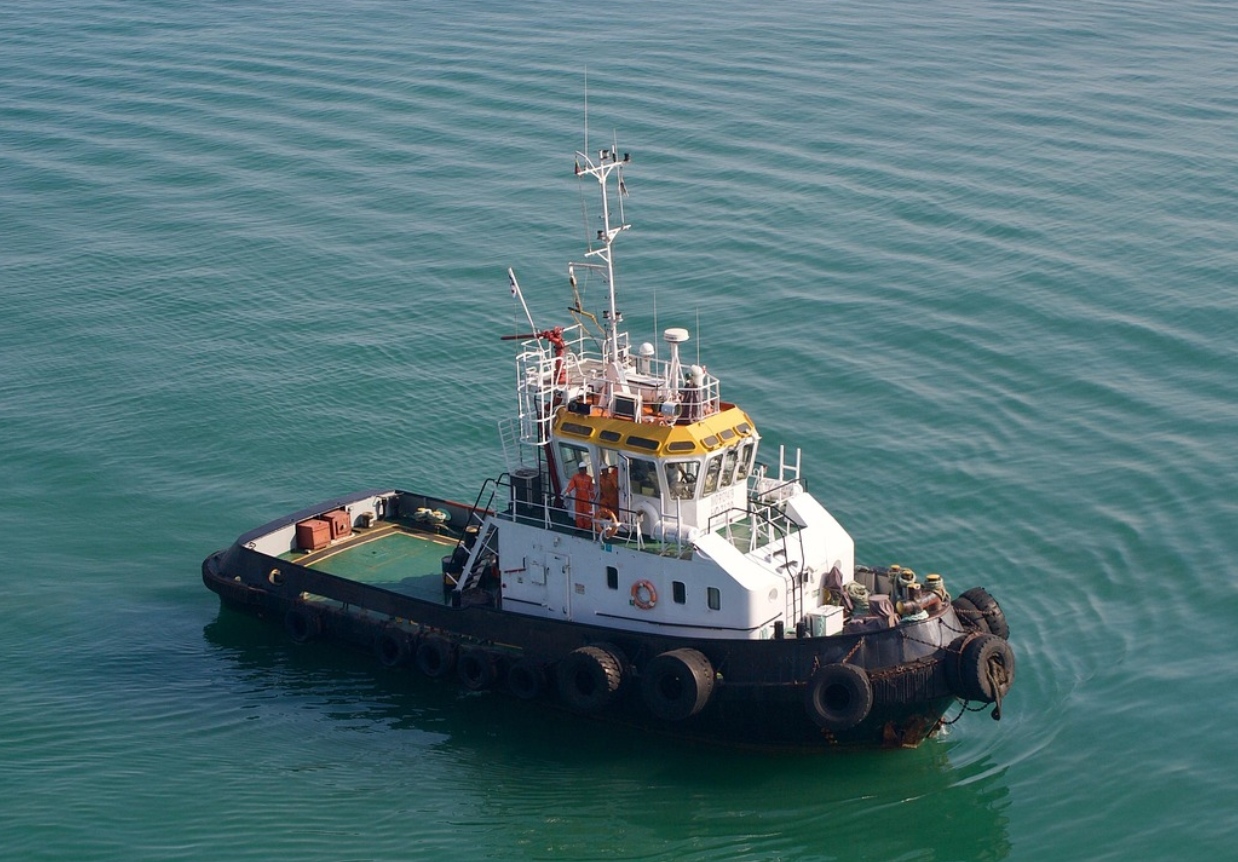
There’s a reason veteran harbor pilots refer to our tugs as the silent backbone of the port. When a 900-foot container ship needs to pivot in a narrow channel with only feet to spare, raw horsepower matters less than precision. Our vessels deliver both, but it’s the latter that earns their keep—an almost intuitive responsiveness that comes from decades of refinement in hull design and thruster placement.
You’ll find them in conditions that keep lesser boats at the dock: ice-choked rivers before dawn, offshore rig moves in quartering seas that would make a crew on a larger ship uneasy. They don’t just cope; they excel. The secret lies in a workboat ethos we’ve never abandoned: systems are overbuilt, maintenance is obsessive, and captains are given enough authority to make real-time calls without second-guessing from shore.
Onlookers sometimes mistake the low growl of the engines for a lack of capability. But walk the decks after a storm shift, and the story is there in the scuffed railings and the calm demeanor of the crew. These tugs don’t need to announce themselves. The ships they’ve nudged into dock, the rigs they’ve held steady in a three-knot current, the heavy-lift cargoes they’ve escorted through fog—that’s the proof.
Not Just a Boat – A Promise of Reliability at Sea
When you're miles from shore, the last thing you want is a vessel that second-guesses itself. This isn't just a boat—it's a calculated promise that every weld, every bolt, and every wire has been tested against the worst the sea can throw at you. From hull integrity to engine reliability, the design philosophy here is simple: failure is not an option.
We've seen too many trips cut short by overlooked fatigue points or cheap electrical work. That's why our construction process involves redundant checks on every critical system—steering, bilge pumps, navigation lights—even the things you hope you'll never need. It's the kind of thoroughness that doesn't make headlines, but it does make it home every time.
The sea doesn't care about your schedule or your reputation. It just tests. And a boat that's more than a boat is one that has already passed those tests before you ever cast off. That's the quiet confidence we build into every hull: not a guarantee of smooth sailing, but a steadfast companion when the water gets rough.
The Hidden Engineering That Keeps Ports Moving
Beneath the ceaseless dance of cranes and the groan of container ships lies a realm of subtle engineering that rarely gets attention. The secret starts with the berthing systems—massive underwater fenders and laser-guided docking aids that can halt a 400-meter vessel with millimeter precision, absorbing forces that would crumple lesser structures. It’s a quiet conversation between ship and quay, choreographed by sensors and hydraulics that never make the headlines.
Bulk material handling has its own hidden choreography. Grain elevators, conveyor networks, and pneumatic unloaders work inside sealed corridors, moving cargo at rates that defy intuition—think 10,000 tonnes of wheat disappearing from a hold in under an hour. The real magic, though, is in the dust suppression: fine mists, foam cannons, and electrostatic collectors trap particulates before they can drift beyond the perimeter, tackling a problem most people don’t even realize exists.
Then there’s the automated orchestration of container terminals. Straddle carriers and automated guided vehicles glide along predetermined routes, but it’s the real-time yard management algorithms—running quietly in a control room—that prevent gridlock. These systems predict dwell times, reshuffle stacks overnight, and even pre-stage containers based on vessel stowage plans, turning a chaotic mountain of boxes into a fluid, seamless flow.
Built to Outlast: A Legacy Forged in Salt and Steel
The cannery stands at the edge of the harbor, its corrugated walls encrusted with decades of salt spray. Inside, the air is thick with the mineral tang of brine and the low hum of machinery that hasn't stopped since 1923. Workers move with practiced rhythm, their gloves stiff from saline baths, handling gleaming steel racks of fish that will be shipped across oceans. Every surface tells a story of resilience—floor plates worn smooth by generations of boots, rivets cold to the touch yet steadfast against the corrosive sea. This isn't just a factory; it's a testament to the stubborn marriage of salt and steel, where the elements meant to destroy are the very things that preserved it.
Steel, chosen not for its beauty but for its unyielding nature, forms the skeleton of the operation. The original blueprints specified an alloy that could laugh at rust, and it has done so for nearly a century. Walk through the pickling rooms and you'll see tanks of carbon steel, their seams still tight after millions of gallons of salt solution have passed through them. The floors are gridded with steel plate, textured to stay sure-footed even as brine sloshes over them daily. Someone once carved a date into a support beam: 1947. The edges are still sharp. The salt that would have eaten lesser metals merely left a patina, a dull silver bloom that the old-timers call 'respect.'
The legacy isn't just in the structure but in the people who shaped it. Many of the welders who pieced together the original vats were immigrants from shipbuilding towns, men who understood that a bad seam meant disaster at sea. Their fingerprints are fossilized in the weld beads, their stubbornness alloyed into every joint. Today, the third generation of their families still runs fingers over those same beads during monthly inspections, nodding at the integrity that has outlasted fads of stainless steel and plastic piping. The cannery doesn't just withstand the salt air—it thrives on it, turning what should be a destroyer into a collaborator, proof that when you build with steel heart and salt sinew, you build for the ages.
When Every Second Counts: Tugs That Deliver Under Pressure
In the frenetic dance of a busy port, where cargo ships the size of skyscrapers jostle for position and schedules are carved in stone, the humble tugboat quietly shoulders a burden few appreciate. When every second counts—a tanker drifting too close to a reef, a container vessel fighting a sudden squall—these compact workhorses surge forward with a blend of raw power and surgical precision. Their crews, seasoned by years on the water, don’t wait for orders to act; they read the currents, the wind, and the subtle body language of a ship in distress, firing up engines that thrum with urgency before the radio even crackles.
What sets a truly dependable tug apart isn’t just horsepower, but the instinct to deliver under pressure without fanfare. Modern azimuth stern drive tugs can pivot on the spot, threading through narrow fairways with centimetre-level control, yet the real magic happens in the split-second decisions made on deck. A skipper who’s wrestled a 200,000-tonne bulk carrier through a gale knows that brute force means nothing without timing—the exact moment to throw a line, the precise angle to nudge a bow, the gut feeling that overrides the computer screen. These are skills forged in long, sleepless nights, not taught in a classroom.
Beyond the hardware and the heroics, the essence of a tug that delivers under pressure lies in its quiet reliability. Breakdowns aren’t an option when a single missed maneuver can cascade into port-wide delays or environmental disaster. That’s why the best operators treat maintenance as a ritual, checking engines with the meticulousness of a surgeon, testing winches before every job, and never releasing a single line until they’ve felt the tension with their own hands. In an industry where the margin for error is vanishingly small, the truest measure of a tug’s worth is that you never hear about it—because everything simply works, even when the world outside is chaos.
FAQ
We focus on heavy-duty steel hulls with reinforced welding at stress points, coupled with corrosion-resistant coatings that can handle constant saltwater exposure. Every vessel undergoes hull thickness checks beyond classification minimums, and our propulsion components are oversized to reduce strain, which pays off over decades of hard use.
Our lineup spans from compact 15-meter harbor tugs to 35-meter open-sea workhorses. We build azimuth stern drive (ASD), tractor tugs, and conventional twin-screw designs. Each model can be tailored with different bollard pulls, typically from 20 up to 80 tonnes, depending on the port or terminal requirements.
We start every project with a detailed operational profile from the client—whether it's ship assist, escort duties, or pushing barges in shallow rivers. Then our naval architects iterate on hull form, skeg configuration, and fendering layout. Prototype testing in simulated conditions validates performance before construction finishes.
Most clients choose diesel-direct or hybrid-electric setups. We often integrate azimuthing thrusters with controllable-pitch propellers for precise maneuvering. For harbor work, we've been fitting IMO Tier III compliant engines with SCR systems, and several recent builds use battery banks for low-emission port entry.
We use a modular build approach where sections are pre-outfitted under cover before final assembly, minimizing weather exposure during construction. Critical welds undergo ultrasonic testing, and we apply multi-layer epoxy coatings with sacrificial anodes tailored to the operating region's salinity and temperature.
Every delivery includes a dedicated service engineer for the first six months of operation, along with a global parts network that stocks common wear items like seals and bearings. We offer crew training on simulators, annual hull surveys, and retrofitting services for evolving emission regulations.
Our tugs handle everything from mega-container ship berthing in busy Asian ports to icebreaking support in Nordic waters. They're also regulars in offshore oil and gas terminals, LNG platform escort, and salvage operations where high bollard pull and reliability are non-negotiable.
Conclusion
Behind every tugboat we build lies a philosophy that strength isn't just about brute force—it's about precision. Each vessel emerges from a process that marries metallurgy with relentless testing, creating an anatomy that shrugs off punishing seas and the grind of 24/7 operations. The hulls are engineered with scantlings that exceed class requirements, yet the real story is in the quiet details: reinforced towing points that distribute stress like a spider's web, and propulsion systems tuned to deliver immense bollard pull without the drama. This quiet strength means our tugs can wrestle the toughest berthing jobs or escort a tanker through a narrow channel without missing a beat. Hidden beneath the deck, redundant systems and smart layouts keep crews safe and ports moving—because a broken-down tug doesn't just delay a ship, it threatens an entire supply chain.
But a tug is more than its specs. It's a promise made in salt spray and steel. Our vessels carry that promise into every contract—whether it's a decade-long charter in the Arctic or a salvage job in a typhoon. We build to outlast, using corrosion-resistant alloys and protective coatings that turn back the sea's relentless attack. The result is a fleet that stays on station, season after season, with minimal downtime. When every second counts—a Mayday call, a drifting barge, a dockline snapped in a squall—our tugs answer with reliability that can't be faked. That legacy isn't just stamped on a builder's plate; it's etched into the trust of captains who know that, in their darkest moment, our tug will be there.
Contact Us
Contact Person: Benny Hu
Email: [email protected]
Tel/WhatsApp: +8618354225697
Website: https://www.allheartmarine.com/