
Wheat Flour Machinery Company Shares Key Considerations for Modern Milling Operations
2026-09-01
Modern milling rarely fails from a single dramatic event—it erodes through overlooked details. Screen selection, tempering time, and roller mill adjustments each shape extraction rates and flour quality more than most operators realize. As a wheat flour machinery company with decades of equipment engineering, PINGLE shares the key considerations that keep a mill running at its designed performance, not just its installed capacity. Here's where the differences hide.
How Modern Millers Cut Energy Waste Without Touching Output
At a plant in the Midwest, a miller realized the biggest energy drain wasn't the grinding itself but the air handling around it. By installing variable-speed fans tied to real-time humidity and load sensors, they cut fan energy by a third. Output stayed flat, but the power bill dropped enough to fund the next retrofit.
Heat recovery is another quiet win. Instead of venting waste heat from compressors and kilns, modern mills route it to pre-warm incoming grain or dry storage areas. One operation saved nearly 20% on natural gas just by rerouting exhaust through a simple heat exchanger, with zero changes to milling speed or product specs.
Then there's the less glamorous side: compressed air audits and motor-rightsizing. Many mills run oversized motors at partial load, wasting energy. Swapping to premium-efficiency motors with soft starters and automated shutoffs between batches trimmed waste further—again without touching throughput.
Why Consistent Particle Size Is the Unsung Hero of Flour Quality
Ask most bakers what they look for in a flour and you'll hear about protein content, ash level, or falling number. Rarely does anyone mention particle size. Yet the uniformity of those tiny granules quietly decides whether a dough hydrates evenly or fights back with dry pockets and sticky patches. When particles are close in size, water moves through the mass at a predictable rate, giving gluten and starch the same chance to develop across every gram of flour.
That consistency also matters for fermentation and mixing tolerance. Fine particles hydrate quickly and can over-soften, while coarse ones stay hard in the center and release starch late. A tightly grouped particle size distribution keeps enzyme activity and gas retention steady, so the dough behaves the same at minute ten as it does at minute forty. This is not something you can judge by looking at a spec sheet for moisture alone—it shows up in how the dough feels under your hands.
For a bakery running the same formula day after day, a shift in average particle size can mean the difference between a clean release from the oven and a batch that slumps or browns unevenly. Consistent granulation doesn't get the credit that protein percentage does, but it is the reason a trusted flour stays trusted. It is the quiet variable that lets a recipe work exactly the same way twice in a row.
The Moisture Balancing Act That Keeps Wheat Milling Profitable
Getting moisture wrong in wheat milling quietly eats into margin. If kernels arrive too dry, bran shatters during break rolls, contaminating flour with ash and cutting extraction. Too much water, and screens blind over, stock clumps in spouts, and a mill can lose hours to cleanup instead of grinding. The aim is a narrow band where bran stays tough and endosperm turns friable enough to release cleanly.
Tempering isn't just adding water; it's timing and distribution. Wheat absorbs moisture at different rates depending on hardness, protein, and ambient temperature. A single setpoint across all wheat mixes usually means over-wetting soft wheat while under-conditioning hard wheat, so operators adjust tempering time and water dose per lot. Inline moisture sensors after dampening give feedback, but the best mills still rely on shift operators checking feel and milling behavior rather than trusting one reading.
The payoff shows in flour extraction and specific energy. A well-conditioned wheat grinds with fewer passes, lower power draw per ton, and less bran powder in the flour. That directly protects the margin per bushel. Conversely, a one-percent drift in moisture can shift extraction enough to erase profit on a week's run, especially when wheat prices are high. Keeping moisture in balance is less about chasing a perfect number and more about controlling variability from intake to first break.
Five Layout Pitfalls That Slow Down Wheat Processing Lines
When a wheat processing line starts running behind schedule, the cause is rarely a single machine. More often, the floor plan itself creates hidden friction. One classic mistake is placing the tempering bins too far from the mill inlet, forcing grain to travel long distances through multiple conveyors before it ever reaches the first break roll. Each transfer point adds residence time, creates spillage, and invites contamination. Another common trap is allowing cleaned wheat and millfeed streams to cross paths. When sifters, purifiers, and bran finishers are arranged without a clear forward flow, operators end up moving product against the stream, which slows down changeovers and makes sanitation nearly impossible.
Space around equipment is another factor that gets overlooked on paper but punishes the line every single day. If a plansifter is wedged between a wall and a purifier with barely enough room to open a door, routine sieve inspection turns into a half-day job. The same applies to roll stands: without access on both sides, roll changes and gap adjustments take two or three times longer than they should. Then there is the issue of dust collection. A layout that runs long, twisting ductwork from multiple aspiration points to a single collector often creates pressure drops that starve the system, leaving fines to build up inside spouting and eventually choke the flow.
Finally, many facilities fail to leave a straight-line path for future expansion. They add a new sifter or a second purifier in whatever corner happens to be free, creating a zigzag material route that lacks any logical sequence. Over time, these small compromises accumulate into a layout where every ton of wheat moves through unnecessary lifts, turns, and dead legs. The result is not a sudden breakdown but a steady erosion of capacity—one that shows up as longer cleaning cycles, more frequent blockages, and a line that can never quite reach its rated throughput.
What High-Efficiency Roller Mills Bring to the Table Beyond Speed
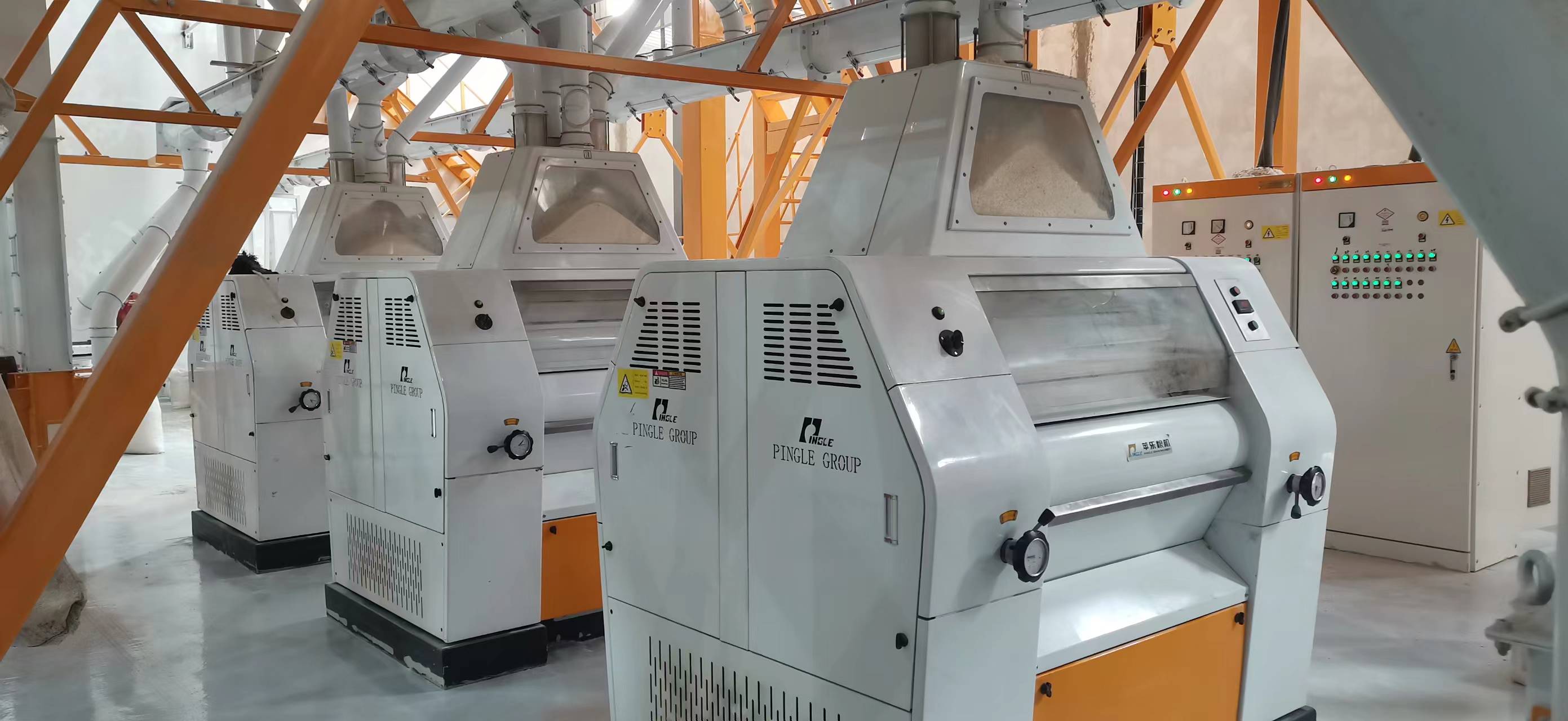
Beyond raw throughput, these mills deliver a level of control over particle size distribution that older impact or attrition equipment simply cannot match. Roller gap, pressure, and feed rate can be tuned independently, letting operators hit tight specification windows for everything from specialty baking flours to abrasive mineral powders. The result is fewer oversized or undersized particles, which cuts down on re-grinding passes and reduces the amount of material that ends up as out-of-spec waste.
Energy consumption per ton of finished product is another area where high-efficiency roller mills stand out. Instead of repeatedly striking or tumbling the material, they compress it between hardened surfaces, directing more input energy into breaking particles along natural fracture planes. Less heat is generated in the process, a critical factor for heat-sensitive ingredients like enzymes, spices, or certain resins. This also limits thermal degradation and preserves functional properties that might otherwise be lost in hotter grinding environments.
Maintenance demands and wear patterns also shift in favor of these designs. Grinding elements are usually segmented, so a single worn section can be replaced without pulling an entire roll out of service. Many models include automated lubrication and continuous wear monitoring, which reduces unscheduled downtime. When you combine those factors with a smaller footprint than a ball mill of comparable capacity, the long-term cost of ownership often tells a much richer story than speed alone ever could.
Automation Upgrades That Pay for Themselves in Reduced Downtime
Most plants already collect enough data to spot trouble before it stalls a line—what they lack is a system that acts on it. Upgrading to sensors that flag vibration shifts or temperature drift lets maintenance teams swap a bearing during a planned window instead of after a midnight failure. The avoided downtime often covers the hardware cost within months, not years.
The fastest payback usually comes from retrofitting older machines rather than replacing them. A $2,000 IoT gateway wired into an existing PLC can stream cycle times and fault codes to a dashboard, turning guesswork into scheduled interventions. When one packaging line cut unplanned stops by 40% in a quarter, the upgrade paid for itself from the first two averted outages.
Reliability gains compound quietly. Fewer emergency calls mean less overtime, fewer rushed parts orders, and longer asset life. Teams that track downtime cost per minute—often $500 to $5,000 depending on the operation—can calculate a break-even point before buying anything. That clarity makes the business case easy, even for skeptical finance managers.
FAQ
Process integration and data visibility should come first. Installing new machines without connecting them to real-time monitoring often raises energy use. The company recommends auditing material flow and bottlenecks before deciding which stages to automate.
Avoid simply dialing down all motors. First measure baseline loads in cleaning, grinding, and pneumatic conveying. Conveying systems often hold a twenty percent energy-saving opportunity through airflow and duct layout adjustments that do not affect particle size.
Sanitary design matters more than cleaning frequency. Choose feed inlets that are easy to open, use sloped surfaces to prevent flour buildup, and reduce pest harborage points. A mill that is hard to clean thoroughly will defeat even the best sanitation schedule.
Look at remaining service life and control system compatibility. If grinding rolls and sifters are still in good condition but the control cabinet is outdated, adding sensors and edge computing modules costs less than full replacement. Compare maintenance cost per ton after retrofit, not just upfront investment.
Vibration analysis and temperature monitoring beat fixed time-based schedules. Placing sensors on critical bearings and rolls catches poor lubrication or misalignment early. Also build a spare parts tier system so wearing items stay at minimum stock, avoiding multi-day stoppages over small components.
Automation relies on stable inputs. If wheat moisture or hardness fluctuates widely, closed-loop controls will constantly adjust roll gaps, causing flour variation and higher energy use. Establish incoming wheat grading and blending plans so tempered moisture deviation stays within three tenths of one percent.
Modular lines with software-defined control offer better returns than jumping to full lights-out automation. Keep manual override points and allow gradual expansion. Pre-install sensor mounting positions and IoT gateways so predictive maintenance can be added later without a costly shutdown retrofit.
Conclusion
Modern milling is no longer just about grinding wheat into flour—it's a tightrope walk between throughput, quality, and cost. Smart operators have found that cutting energy waste doesn't mean sacrificing output; instead, they fine-tune roll gaps, optimize aspiration, and run machines at their sweet spot. Meanwhile, consistent particle size quietly determines everything from dough handling to bake volume, yet it's often overlooked until a customer complains. And then there's moisture—too little and the bran shatters, too much and you're paying to evaporate water. Getting that balance right keeps the mill profitable year-round.
Beyond the grinding chamber, the physical layout of a processing line can make or break daily throughput. Common pitfalls like cramped sifter access, poorly placed pneumatic lines, or inadequate buffer storage force operators into constant firefighting. High-efficiency roller mills now deliver more than speed—they offer better sanitation, easier roll changes, and lower vibration, which translates into fewer quality deviations. Finally, the most underrated investment is automation: sensors that predict bearing wear, automatic roll gap adjustment, and real-time moisture feedback loops. These upgrades pay for themselves not through labor savings alone, but by slashing unplanned downtime and keeping every tonne of wheat moving without interruption.
Contact Us
Contact Person: Jiakuo Wu
Email: [email protected]
Tel/WhatsApp: +86-13011566087
Website: https://www.pinglemachine.com