
Wholesale Karate Chest Guard Buying Guide for Martial Arts Schools
2026-08-29
Ask ten martial arts instructors what matters most in a chest guard, and you’ll get ten different answers—until someone takes a hard kick with a flimsy pad. Then the debate ends. Buying wholesale karate chest guards for your school means balancing protection, fit, and long-term cost, not just grabbing the cheapest bulk listing. This guide walks through what actually matters: foam rebound, adjustable strapping, size ranges for mixed-level classes, and red flags that lead to reordering mid-season. If you’re tired of gear that breaks down before the belt tests do, PandaWin Sports has bulk options designed for real dojo wear. Here’s how to buy smarter.
Foam Density vs. Thickness: What Actually Stops a Kick
Most people assume a thicker foam pad automatically delivers better impact protection. That line of thinking misses a critical variable: density. A low-density foam block, no matter how tall it stands, compresses too quickly under a fast strike. The energy passes through to whatever sits behind it — often the wall or a training partner holding the shield. What truly stops a kick is the foam's resistance to bottoming out, and that resistance comes from how tightly the foam cells are packed, not how much vertical space they occupy.
High-density foam absorbs force by spreading it across a wider area and slowing the deceleration of the incoming limb. But density alone has limits. Too dense, and the surface feels like concrete — it transfers pain back into the striker's shin or foot rather than dissipating the blow. The sweet spot sits somewhere in the middle: enough density to prevent full compression, combined with enough thickness to allow gradual energy absorption over a longer travel distance. A thin, ultra-dense pad stops the kick instantly, but it does so by reflecting energy instead of absorbing it.
Real-world testing on heavy bags and kicking shields shows a consistent pattern. A two-inch pad with medium-high density often outperforms a four-inch pad made of soft, airy foam. The thinner dense pad holds its shape under repeated impacts, while the thick soft one develops soft spots and dead zones after a few sessions. For anyone choosing or building a striking target, the practical rule is to first lock in a foam density that won't fully collapse under your hardest kick, then add thickness only as extra insurance — never as a substitute for density.
Strap Systems That Survive a Year of Classes
After lugging around textbooks, a laptop, and a water bottle every day for two semesters, the straps on this pack still haven't stretched out. The foam padding hasn't gone flat, and the stitching along the attachment points shows zero fraying. Most bags I've owned start to dig into my shoulders by October, but these keep the load balanced even when I'm sprinting across campus.
I've also noticed the adjusters stay put once you set them. No slipping down mid-walk, which used to drive me crazy with cheaper packs. The webbing feels thick enough to handle getting yanked on and off a hook in a lecture hall, but it doesn't have that stiff, abrasive edge that eats into your neck. After a full year of near-daily use, the only sign of wear is a slight shine on the buckle.
Honestly, the strap system is the reason I'd buy this bag again. It distributes weight across the chest instead of letting everything sag into the lower back, which makes a difference when you're carrying a full course load plus gym clothes. No frayed threads, no cracked plastic, no excuses to replace it before graduation.
Wholesale Pricing Structures You Can Negotiate
Most buyers stop at asking for a lower per-unit price, but the real leverage in wholesale lies in reshaping how the total cost builds up. One overlooked structure is the retroactive tier discount: instead of a flat rate, you agree to purchase 500 units at $8.10, 1,200 units at $7.35, and 2,500 units at $6.80, with the lower price applied to all units once the higher tier hits. This rewards forecasting accuracy and turns a simple purchase order into a long-term margin tool.
Payment and freight terms can change your landed cost more than a 2% price cut. For example, negotiating 60-day terms with no early payment penalty, or shifting freight from prepaid-and-add to collect using your own carrier account, removes hidden markup. Some distributors will also agree to cover pallet configuration or barcode labeling costs if you ask during contract renewal rather than at the first quote.
Consider trading exclusivity or minimum order frequency for structural advantages. If you commit to a quarterly minimum, you can often secure a consignment stock arrangement or a first-right-to-buy on closeout inventory. These clauses rarely appear on a standard wholesale price sheet, but they are common in negotiated supplier agreements and directly improve cash flow and assortment flexibility.
Tournament Compliance Checks Before You Buy
Many anglers rush to buy new gear only to find it is not legal for their next tournament. Before you swipe a card, pull up the official rulebook for your specific circuit or governing body. Look for clauses on equipment dimensions, materials, and any recent amendments that might not appear in older forum posts.
Some manufacturers label products as "tournament approved," but that badge means little if your local series enforces stricter standards. Cross-check the product's specs against the event's gear restrictions, including weight, length, and even color markings where applicable. If the rulebook references a testing protocol, confirm the item has passed that exact test—not a similar one.
When in doubt, email the tournament director with the product's SKU or a link before purchase. A quick reply can save you from a costly return or a disqualification on game day. Keep a screenshot of the approval in your phone for check-in, as some officials may ask for proof at inspection.
Running a Sample Order Without Overpaying
Before you pay anything, cut the sample list down to what actually needs testing. Most overpayment happens when buyers request every color, material, or size variant at once. Ask the supplier to send only the two or three options you are truly unsure about, and request uncoated, unfinished, or smaller-dimension pieces where possible. You will often find the per-unit sample price drops sharply once the request stops looking like a mini production run.
Push for a sample fee that can be credited toward your first bulk order. Many factories mark up sample charges simply because they assume the cost is gone the moment it leaves their door. If a supplier refuses a credit, offer to cover the freight while they absorb the sample making cost, or suggest grouping several buyers' samples into one shipment through a freight forwarder. That alone can remove a large part of the hidden handling markup inside sample invoices.
Ignore rush delivery and premium packaging unless your deadline truly demands them. Standard postal or economy courier services are enough for most sample checks, and plain wrap protects just as well as a branded box. Keep a short record of what each supplier quotes for sample, shipping, and any extra fees. Seeing those numbers side by side makes it much easier to spot the ones charging double for the same service.
Stocking the Right Mix of Sizes for Your Dojo
Ordering a flat distribution of gi sizes rarely matches how students actually fill a dojo. Smaller adult sizes and youth sizes tend to move faster after beginner intakes, while larger sizes often sit untouched for months. Instead of restocking every size equally, track which belts and ages are growing in your classes and keep a deeper buffer on the three or four sizes that account for most new sign-ups.
A practical approach is to split inventory into core sizes and occasional sizes. Core sizes get reordered before they hit a two-week supply, while occasional sizes are treated as special-order items with one or two units on hand. This keeps cash from being tied up in slow-moving stock and still lets a new student walk out with a uniform on day one.
Don't forget that sizing runs differently across brands, especially between lightweight and heavyweight gis. Keep a measuring tape at the desk and note any size exchanges in a simple log. Those patterns will tell you more about what to stock than any generic size chart, because the real mix is shaped by your students' ages, body types, and training intensity.
FAQ
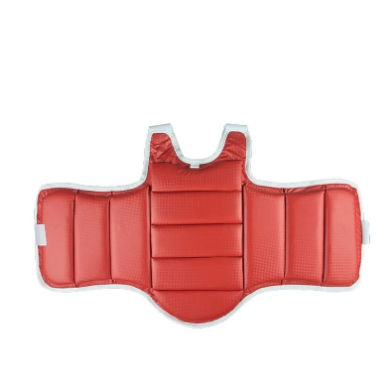
Focus on closed-cell foam that rebounds quickly and doesn't flatten after repeated hits. A thickness between 20mm and 30mm on the chest plate is usually enough for light to medium contact, while heavy sparring might need closer to 40mm. Check that the outer layer is tear-resistant vinyl or PU leather so the guard doesn't crack after a few months of daily use.
Most manufacturers size by height or chest circumference rather than age, so ask for a size chart before committing. A common split for a school with 100 active students is roughly 40% small/medium for children, 35% large for teens, and 25% XL for adults. Order a few extra smalls and mediums because kids grow faster than you expect, but avoid overstocking XL unless you have a lot of adult black belts.
If your school only uses the chest guards for dojo practice, you don't need competition-level certification. But if your students enter tournaments, look for guards that at least meet the same impact dispersion standards as WKF-approved gear. Some wholesale suppliers sell both certified and non-certified versions, so always ask for documentation if an event requires approved equipment.
Many wholesalers advertise low MOQs around 20 to 50 pieces, but the per-unit price drops significantly once you pass 100. If you have fewer than 50 students, consider pooling an order with a neighboring dojo or ordering a mixed-size batch with a supplier that allows multi-size cartons. Don't get locked into a 500-piece deal just to save two dollars per guard unless you have storage space and a clear growth plan.
Yes, most manufacturers offer silk-screen printing or heat-transfer logos for orders over 50 pieces, and some include one-color printing for free at 100 pieces. Embossing or multi-color logos will cost extra and often require a mold fee, which only makes sense for very large orders. Ask for a digital proof before production and request a physical sample if your logo has fine details that might blur.
With daily use, a mid-range PU leather guard will hold up for about 12 to 18 months before the straps stretch or the foam loses density. Vinyl covers tend to crack sooner, especially in dry climates or if left in hot cars. Rotate your inventory so no single guard gets used for every class, and inspect the elastic straps monthly because that's usually the first part to fail.
Beyond the unit price, factor in shipping, customs duties, and possible warehousing fees if the shipment arrives before you're ready to distribute. Some factories quote FOB prices, which means you're responsible for freight and insurance from the port onward. Always ask for a DDP or door-to-door quote if you want the total landed cost without surprises.
For most karate schools, a unisex design with adjustable side straps works fine and simplifies inventory. Female-specific guards can offer better chest coverage and comfort, but they often cost 10-15% more and require accurate sizing data from your female students. Start with unisex guards and add a small female-specific line only if you get repeated complaints about fit.
Conclusion
When buying karate chest guards in bulk, the real test isn't the labeled thickness—it's how the foam density works with that thickness to absorb and disperse impact. A 2-inch guard made from low-density foam will bottom out long before a 1.5-inch guard with high-rebound, closed-cell padding. Ask suppliers for compression test data or bounce-back specs, not just millimeter counts. The same practical scrutiny applies to straps. Over a year of classes, cheap elastic and plastic buckles stretch, crack, or slip during sparring. Look for wide, reinforced webbing with double-bar tacking and metal or heavy-duty acetal buckles, and request a worn-sample if possible. Sizing is another place where dojos lose money: a standard 60/30/10 split of medium/large/small rarely works. Audit your current student roster by chest circumference, not belt rank, and order at least 15% extra in the two most common sizes—usually medium and large for teens and adults—while keeping youth sizes in lower quantity.
Wholesale pricing isn't just about the per-unit cost on a price sheet. Suppliers often have hidden levers: mixed-case discounts, tiered breaks that reset at container quantities, and off-season rates if you order in late spring or early fall. Ask for a landed-cost breakdown including shipping and customs, and be ready to negotiate on payment terms—net 45 or a small deposit can beat a 3% unit discount if it preserves cash flow. Before you commit, verify that each guard meets the competition rules your students actually enter, such as WKF or national federation padding coverage and thickness limits; a cheap non-compliant guard is worthless for tournament teams. Finally, run a deliberate sample order of no more than six to ten guards across the sizes you plan to stock. Use them in real classes for three to four weeks, wash them per instructions, and check strap fatigue and foam memory. That small upfront cost prevents a pallet of gear that fails after the first tournament season.
Contact Us
Contact Person: Fei Xu
Email: [email protected]
Tel/WhatsApp: +8618631245578
Website: https://www.pandawinsports.com/